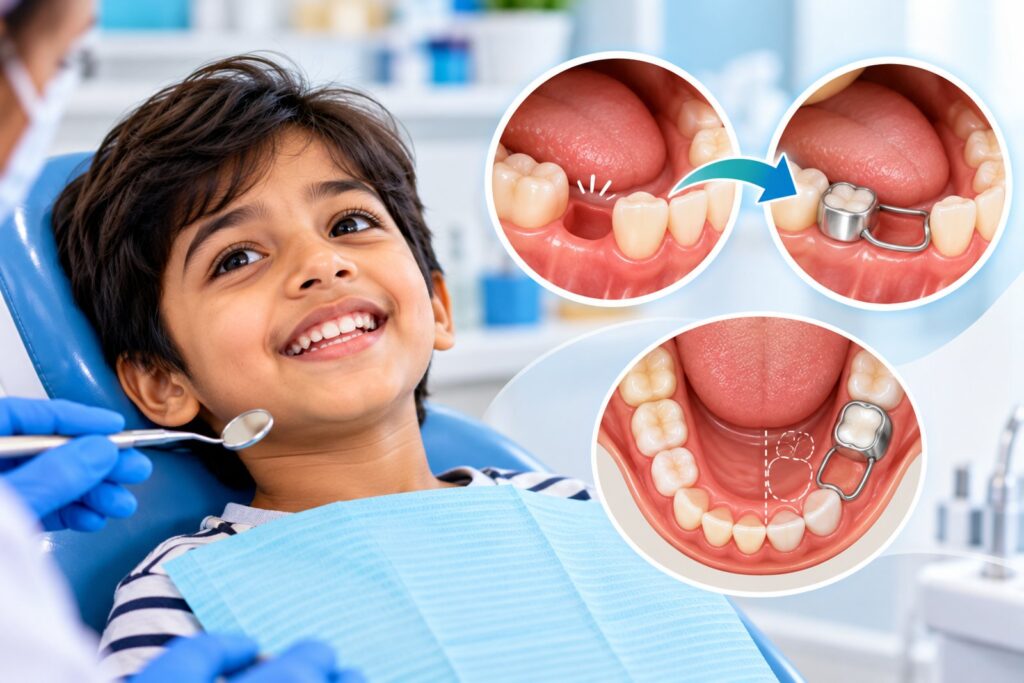
Space maintainers play a key role in children’s dental health. When a child loses a baby tooth early, space maintainers help keep the gap open. This simple dental device can prevent future problems, such as tooth misalignment in kids. As a result, your child’s smile stays healthy and strong. Many parents do not realize how important space maintainers are for protecting a child’s future smile.
What Are Space Maintainers?
Space maintainers are small dental appliances. Dentists use them to hold space when a child loses a baby tooth too soon. Because baby teeth guide adult teeth into place, losing one early can cause shifting. Space maintainers help prevent this. According to the American Academy of Pediatric Dentistry, these devices are safe and effective for children. They are custom-made to fit your child’s mouth.
Why Children Might Need Space Maintainers
Sometimes, children lose baby teeth before the adult tooth is ready to come in. This can happen for several reasons. For example, tooth decay, injury, or infection may cause early loss. If the space is not kept open, nearby teeth may move into the gap. Therefore, space maintainers help prevent crowding and misalignment. In many cases, they reduce the need for braces later.
Types of Space Maintainers
There are several types of space maintainers. Your pediatric dentist will choose the best one for your child. Each type works in a slightly different way. However, all aim to keep the space open until the adult tooth appears.
How Space Maintainers Work
First, the dentist checks your child’s mouth. Then, they decide if a space maintainer is needed. Once placed, the device holds the gap open. This allows the adult tooth to grow in the right spot. Because space maintainers are custom-made, they fit comfortably. Children can eat, speak, and smile as usual. Still, regular checkups are important to make sure everything is working well.
The Process of Getting a Space Maintainer
Getting a space maintainer is a simple process. First, the dentist examines your child’s teeth. Next, they take a mold or scan of the mouth. Then, a dental lab creates the custom device. At a second visit, the dentist fits the space maintainer. After that, your child will need regular checkups. These visits help ensure the device stays clean and works well. If you need help, you can always find a pediatric dentist near you.
Caring for Space Maintainers: Tips for Parents
Proper care helps space maintainers last longer. With the right steps, your child’s dental appliance will stay clean and safe. Here are some helpful tips for parents:
Because good care prevents problems, your child’s smile stays healthy.
Potential Risks and Complications
Most children do well with space maintainers. However, some risks exist. For example, the device can become loose or break. Sometimes, food can get trapped, leading to gum irritation. In rare cases, the space maintainer may cause sores or discomfort. If you notice any of these problems, contact your dentist right away. Regular visits help catch issues early. According to the CDC, good oral hygiene lowers the risk of complications.
Preventing Tooth Loss in Children
Preventing early tooth loss is the best way to avoid needing space maintainers. Parents can help by teaching good dental habits. Because healthy teeth last longer, children are less likely to lose them too soon. Here are some ways to protect your child’s teeth:
With these steps, you can help prevent tooth misalignment in kids and support their future smile.
Conclusion
If you have questions about space maintainers or your child’s dental health, we are here to help. Book a consultation at Smile Way Dental Clinic to keep your child’s smile healthy and bright.